

On this page

Ticka shared his experience selling on ebay.com.au after using DroboAI for several months in 2026. This edited account focuses on the useful habits in his story, with his original sales image retained for context.
The context behind the story
In the original community post, Ticka reported roughly five to ten orders a day and described running the store alongside his electrical business. Those were his reported results at the time, not a typical outcome or an independently audited profit record.
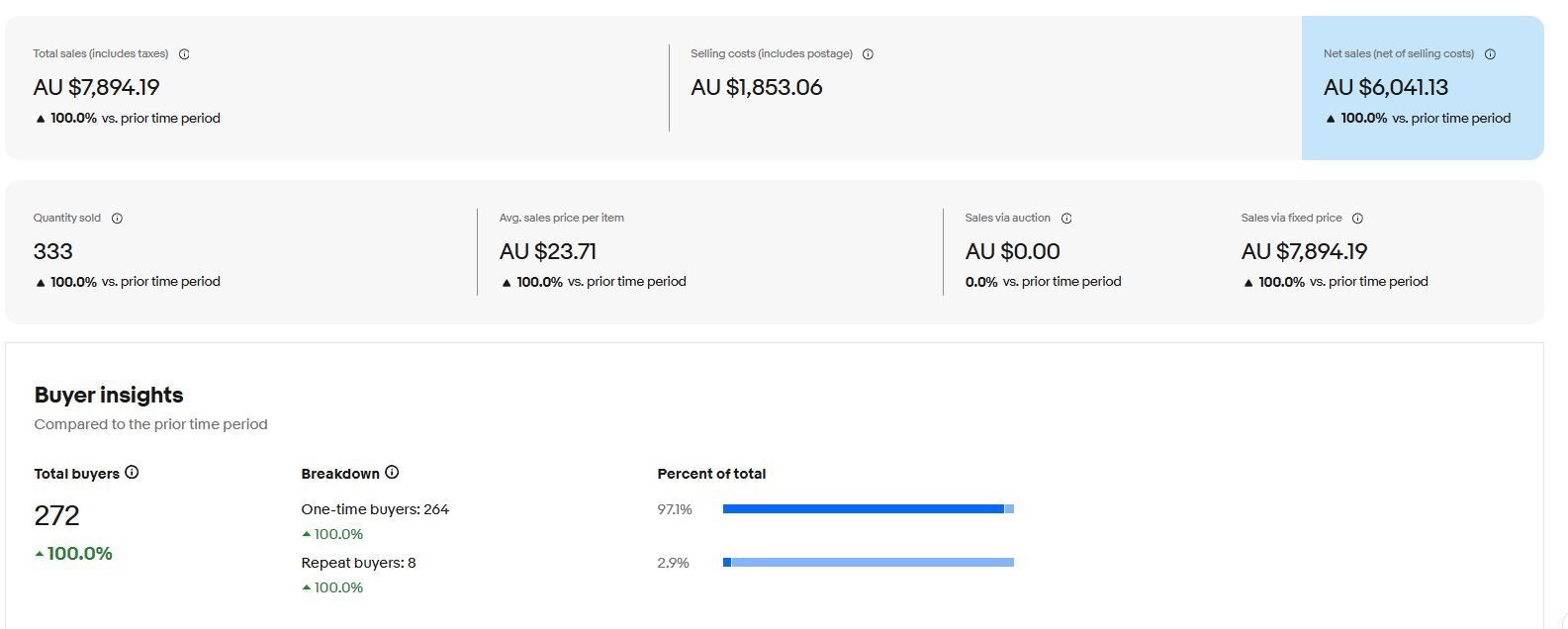
The notes below are an editorial summary. They should not be read as a current setup specification for DroboAI or a substitute for marketplace rules.
His pricing lesson: leave room for real costs
Ticka described increasing his markup after learning more about shipping charges and advertising costs. The general lesson is useful: the gap between supplier price and selling price is not all yours to keep.
He also wanted to vary pricing by product cost. That is a reason to consider price bands, provided the rule clearly defines markup, profit target or fixed selling price. Do the arithmetic for your own store rather than copying his percentages.
Our profit margin guide walks through one complete sale and explains the difference between markup and margin.
Supplier reliability matters every day
His story included occasions where a product’s shipping conditions changed or the item was unavailable. Those problems can turn an apparently profitable listing into an exception that takes time to resolve.
Keep the source link, variant, purchase cost and delivery terms together. Review a source that repeatedly creates problems before adding more of its products.
Some advice in the original post concerned account “warming” and hiding the retailer behind fulfillment. We do not present those suggestions as reliable operating guidance. Read the current sourcing-policy guide before choosing your model.
Keep records beyond the sales total
One of the most practical habits Ticka described was separating business transactions so he could follow purchases, expenses and payouts.
“I set up a separate bank account”
Ticka, original community post
Whether you use a dedicated account or bookkeeping software, make each order traceable. Include actual fees, shipping, refunds, subscriptions and other overhead. A dashboard revenue total cannot answer how much the business earned.
Use the calculator for estimates before a sale, then reconcile those estimates against completed orders.
Take the routine, not a promise of results
Ticka described checking orders, answering questions and maintaining listings as part of an evening routine. That is a more useful idea to borrow than a target number of listings or an expected daily income.
Build a short queue of what needs action: dispatch deadlines, buyer questions, source changes and failed tasks. Keep it manageable as the store grows.
Your products, costs, account and time available may differ from his. Start with records you can verify and a process you can support. Use the order workflow guide to turn that into a practical checklist.
Sources & further reading
References checked 20 September 2026. Marketplace requirements can change.
Make the routine easier.
Compare DroboAI Software and Cloud, or read the setup guides before choosing a plan.
Keep reading
All posts
Amazon to eBay dropshipping: start with the numbers
Understand Amazon to eBay sourcing, marketplace rules, product matching and real selling costs before you build a listing workflow.
AliExpress to eBay: evaluate a supplier before you list
A practical AliExpress supplier checklist for eBay sellers: product variants, delivery evidence, returns, landed costs and sourcing rules.